Anatomia układu nerwowego | Nervous System Anatomy

Tooltip Implementation .tooltip { position: relative; cursor: pointer; text-decoration: none; border-bottom: 1px dashed rgba(0, 0, 0, 0.6); } .tooltip::before { content: attr(data-tooltip); position: absolute; background-color: rgba(255, 255, 255, 0.9); color: #333; padding: 6px 12px; border-radius: 8px; white-space: normal; opacity: 0; visibility: hidden; transform: translateY(-100%); transition: opacity 0.3s ease, visibility 0.3s ease, transform 0.3s ease; font-family: ‘Arial’, sans-serif; font-size: 14px; box-shadow: 0px 4px 8px rgba(0, 0, 0, 0.1); z-index: 10; } .tooltip:hover::before { opacity: 1; visibility: visible; transform: translateY(-100%); left: 1%; transform: translateX(-1%) translateY(-100%); } document.addEventListener(‘DOMContentLoaded’, function () { const wordsToTooltip = { “Peripheral Nervous System (PNS)”: “Obwodowy układ nerwowy”, “Central Nervous System (CNS)”: “Ośrodkowy układ nerwowy”, “Somatic Nervous System (SNS)”: “Somatyczny układ nerwowy”, “Autonomic Nervous System (ANS)”: “Autonomiczny układ nerwowy”, “Cranial Nerves”: “Nerwy czaszkowe”, “Spinal Nerves”: “Nerwy rdzeniowe”, “Olfactory”: “Węchowy”, “Optic”: “Wzrokowy”, “Oculomotor”: “Okoruchowy”, “Trochlear”: “Bloczkowy”, “Trigeminal”: “Trójdzielny”, “Abducens”: “Odwodzący”, “Facial”: “Twarzowy”, “Vestibulocochlear”: “Przedsionkowo-ślimakowy”, “Glossopharyngeal”: “Językowo-gardłowy”, “Vagus”: “Błędny”, “Accessory”: “Dodatkowy”, “Hypoglossal”: “Podjęzykowy”, “Brainstem”: “Pień mózgu”, “Extraocular muscles”: “Mięśnie zewnątrzgałkowe”, “Superior oblique muscle”: “Mięsień skośny górny”, “Lateral rectus muscle”: “Mięsień prosty boczny”, “Facial muscles”: “Mięśnie twarzy”, “Salivary glands”: “Gruczoły ślinowe”, “Inner ear”: “Ucho wewnętrzne”, “Pharynx”: “Gardło”, “Larynx”: “Krtań”, “Thoracic organs”: “Narządy klatki piersiowej”, “Abdominal organs”: “Narządy jamy brzusznej”, “Sternocleidomastoid”: “Mięsień mostkowo-obojczykowo-sutkowy”, “Trapezius”: “Mięsień czworoboczny”, “Tongue muscles”: “Mięśnie języka”, “Sensory fibers”: “Włókna czuciowe”, “Motor fibers”: “Włókna ruchowe”, “Afferent fibers”: “Włókna aferentne”, “Efferent fibers”: “Włókna eferentne”, “Dermatome”: “Dermatom”, “Cervical spinal nerves”: “Nerwy rdzeniowe szyjne”, “Thoracic spinal nerves”: “Nerwy rdzeniowe piersiowe”, “Lumbar spinal nerves”: “Nerwy rdzeniowe lędźwiowe”, “Sacral spinal nerves”: “Nerwy rdzeniowe krzyżowe”, “Coccygeal nerve”: “Nerw guziczny”, “Diaphragm”: “Przepona”, “Autonomic functions”: “Funkcje autonomiczne”, “Homeostasis”: “Homeostaza”, “Sympathetic Nervous System”: “Układ współczulny”, “Parasympathetic Nervous System”: “Układ przywspółczulny”, “Fight-or-flight response”: “Reakcja walki lub ucieczki”, “Heart rate”: “Częstość akcji serca”, “Blood pressure”: “Ciśnienie krwi”, “Digestion”: “Trawienie”, “Respiratory rate”: “Częstość oddechów”, “Ganglia”: “Zwoje nerwowe”, “Thoracic spinal cord”: “Rdzeń kręgowy odcinka piersiowego”, “Lumbar spinal cord”: “Rdzeń kręgowy odcinka lędźwiowego”, “Stored glucose”: “Zmagazynowana glukoza”, “Parasympathetic nerves”: “Nerwy przywspółczulne”, “Brainstem”: “Pień mózgu”, “Sacral spinal cord”: “Rdzeń kręgowy odcinka krzyżowego”, “Target organs”: “Narządy docelowe”, “Olfactory”: “Węchowy”, “Optic”: “Wzrokowy”, “Oculomotor”: “Okoruchowy”, “Trochlear”: “Bloczkowy”, “Trigeminal”: “Trójdzielny”, “Abducens”: “Odwodzący”, “Facial”: “Twarzowy”, “Vestibulocochlear”: “Przedsionkowo-ślimakowy”, “Glossopharyngeal”: “Językowo-gardłowy”, “Vagus”: “Błędny”, “Accessory”: “Dodatkowy”, “Hypoglossal”: “Podjęzykowy”, “Head”: “Głowa”, “Neck”: “Szyja”, “Shoulders”: “Ramiona”, “Arms”: “Ramiona”, “Chest muscles”: “Mięśnie klatki piersiowej”, “Abdominal muscles”: “Mięśnie brzucha”, “Pelvis”: “Miednica”, “Lower legs”: “Podudzia”, “Feet”: “Stopy”, “Tailbone”: “Kość ogonowa”, “Sympathetic ganglia”: “Zwoje współczulne”, “Parasympathetic ganglia”: “Zwoje przywspółczulne”, “Sensory (afferent) fibers”: “Włókna czuciowe (aferentne)”, “Motor (efferent) fibers”: “Włókna ruchowe (eferentne)”, “Cervical”: “Szyjny”, “Lower abdomen”: “Dolna część brzucha”, “Thoracic”: “Piersiowy”, “Lumbar”: “Lędźwiowy”, “Sacral”: “Krzyżowy”, “Coccygeal”: “Guziczny”, “Dilate airways”: “Rozszerzać drogi oddechowe”, “Spinal cord”: “Rdzeń kręgowy”, “Sympathetic nerves”: “Nerwy współczulne” }; // Normalize keys in the dictionary const normalizedWordsToTooltip = {}; for (const [key, value] of Object.entries(wordsToTooltip)) { const cleanedKey = key.replace(/(.*?)/g, ”).trim(); // Remove anything in parentheses normalizedWordsToTooltip[cleanedKey.toLowerCase()] = value; } function processNode(node) { if (node.nodeType === Node.TEXT_NODE && node.nodeValue.trim()) { let content = node.nodeValue; // Regex to match only the main words (ignores parentheses) const regex = new RegExp( `\b(${Object.keys(normalizedWordsToTooltip).join(‘|’)})\b`, ‘gi’ ); if (regex.test(content)) { const wrapper = document.createElement(‘span’); wrapper.innerHTML = content.replace(regex, (match) => { const tooltip = normalizedWordsToTooltip[match.toLowerCase().trim()]; return `${match}`; }); node.replaceWith(wrapper); } } else if (node.nodeType === Node.ELEMENT_NODE) { Array.from(node.childNodes).forEach(processNode); } } document.querySelectorAll(‘body *:not(script):not(style)’).forEach((element) => { Array.from(element.childNodes).forEach(processNode); }); });

Peripheral Nervous System (PNS)

The PNS connects the CNS to the limbs and organs, facilitating communication throughout the body. It is organized into cranial and spinal nerves and is further divided into two main systems:

  • Somatic Nervous System (SNS) 
  • Autonomic Nervous System (ANS)

Somatic Nervous System (SNS)

The Somatic Nervous System (SNS) is a branch of the peripheral nervous system responsible for managing voluntary bodily movements and relaying sensory information to the central nervous system (CNS). The SNS is composed of two primary types of nerves: Cranial Nerves and Spinal Nerves.

Cranial Nerves

There are 12 pairs of cranial nerves that arise directly from the brain, primarily the brainstem. These nerves have specific sensory, motor, or mixed functions that control various sensory perceptions and muscle movements in the head and neck region.

Cranial NerveNumberMain Innervation
OlfactoryINasal cavity (smell)
OpticIIEyes (vision)
OculomotorIIIEye muscles (most extraocular muscles and pupil constriction)
TrochlearIVSuperior oblique muscle of the eye
TrigeminalVFace, mouth, jaw (sensory and motor functions)
AbducensVILateral rectus muscle of the eye
FacialVIIFacial muscles, anterior 2/3 of the tongue (taste), salivary glands
VestibulocochlearVIIIInner ear (hearing and balance)
GlossopharyngealIXPharynx, posterior 1/3 of the tongue (taste), salivary glands
VagusXThoracic and abdominal organs (autonomic functions), pharynx, larynx
AccessoryXINeck and shoulder muscles (sternocleidomastoid and trapezius)
HypoglossalXIITongue muscles

Spinal Nerves

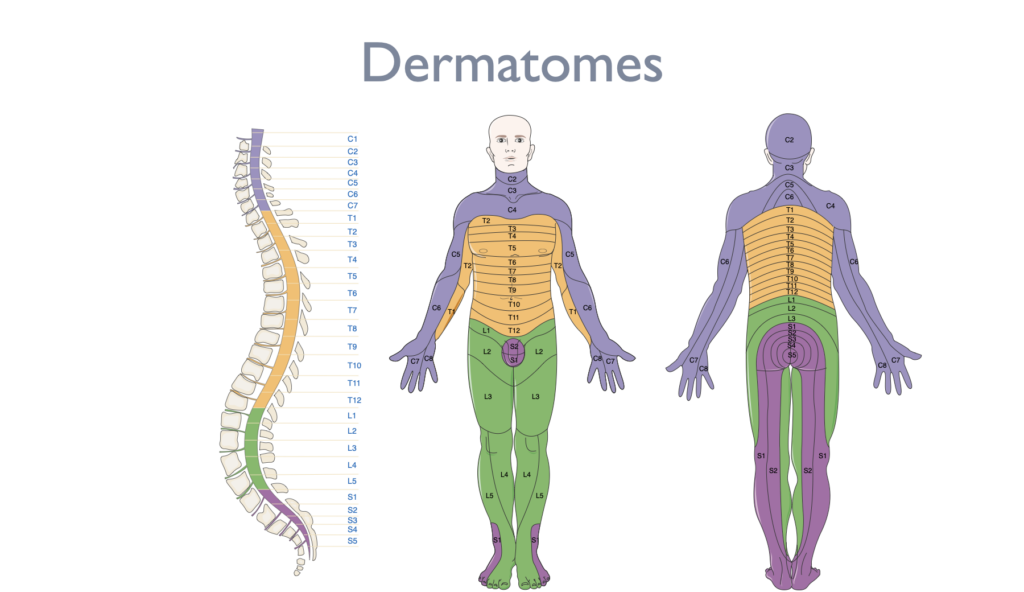
The 31 pairs of spinal nerves emerge from the spinal cord, innervating various parts of the body and enabling voluntary control over muscles and perception of sensory input. Each spinal nerve is composed of sensory (afferent) fibers and motor (efferent) fibers. These nerves are organized into five main regions, each serving a distinct dermatome.

Spinal Nerve RegionNumber of PairsInnervation
Cervical (C1-C8)8Head, neck, shoulders, arms, diaphragm
Thoracic (T1-T12)12Chest and abdominal muscles
Lumbar (L1-L5)5Lower abdomen, hips, and legs
Sacral (S1-S5)5Pelvis, lower legs, and feet
Coccygeal (Co1)1Skin around the tailbone

Autonomic Nervous System (ANS)

The Autonomic Nervous System (ANS) is a branch of the peripheral nervous system responsible for regulating involuntary bodily functions, including heart rate, blood pressure, digestion, and respiratory rate. Unlike the somatic nervous system, which governs conscious actions, the ANS operates below the level of conscious control, maintaining homeostasis and adjusting the body’s internal environment in response to external conditions.

The ANS is divided into two main subdivisions

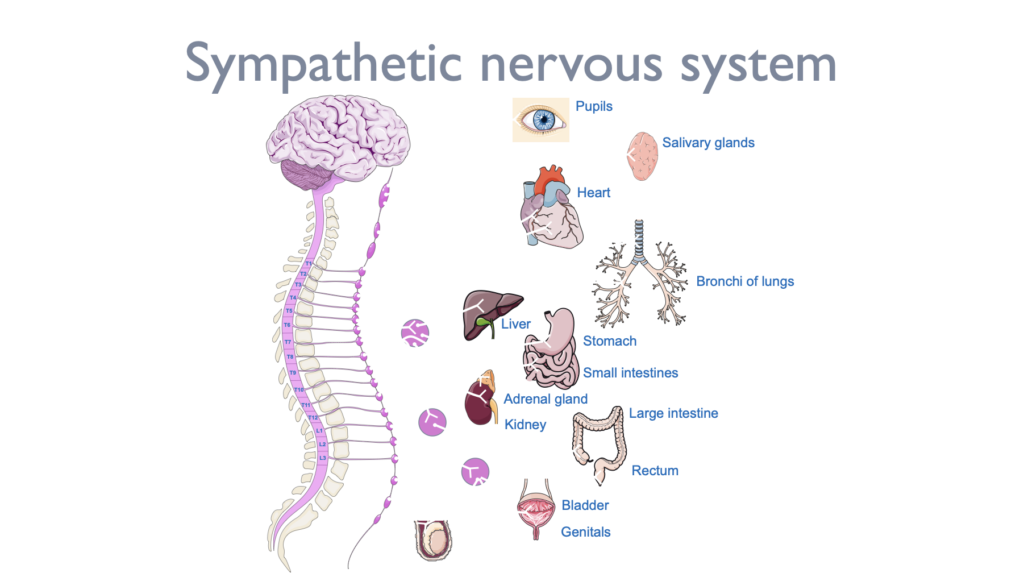
  • Sympathetic Nervous System: Often referred to as the “fight-or-flight” system, the sympathetic nervous system prepares the body to respond to stress or emergencies. Originating from the thoracic and lumbar regions of the spinal cord, sympathetic nerves increase heart rate, dilate airways, and release stored glucose for quick energy. This system’s ganglia are located close to the spinal cord, allowing rapid communication and swift physiological responses.
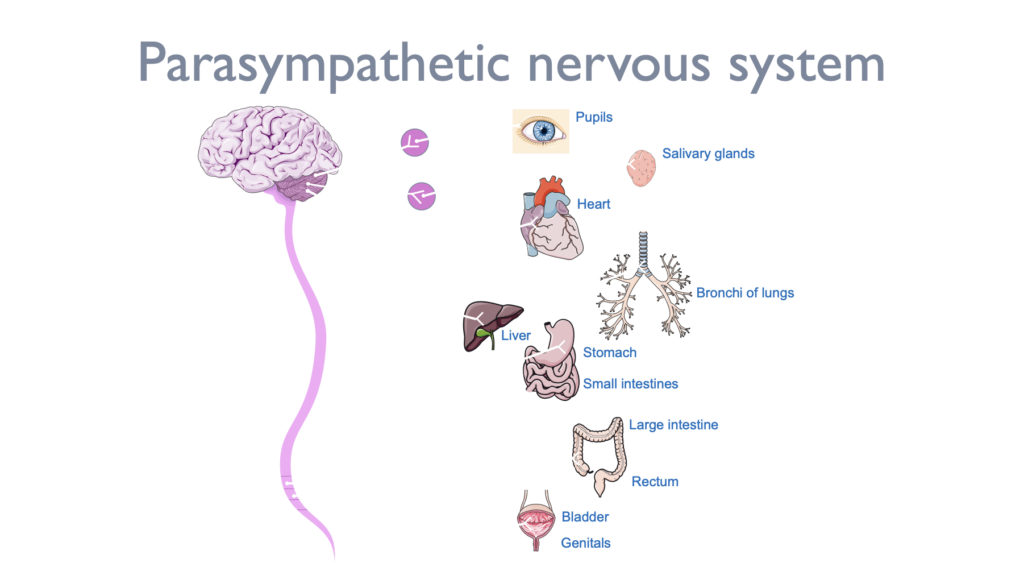
  • Parasympathetic Nervous System: Known as the “rest-and-digest” system, the parasympathetic nervous system conserves energy and supports relaxation, recovery, and digestion. Parasympathetic nerves primarily originate from the brainstem and sacral spinal cord, with ganglia located near or within the target organs, promoting a slower, sustained response that aids in relaxation, energy conservation, and nutrient processing.